If your cannabis leaves are turning yellow, don’t panic — this is one of the most common issues growers run into.
The tricky part is that yellowing can come from several different causes, and the fix depends entirely on what’s actually happening in your plant.
Not sure what’s causing it?
Post a photo and growers here will help you figure it out quickly. You’ll usually get friendly, real advice pretty fast.
Your yellow leaves may be caused by:
Still not sure? That’s normal.
Yellowing can have multiple causes at the same time.
Post a photo and we’ll help you narrow it down.
Yellow leaves on cannabis plants are one of the most common problems beginner growers face. This guide explains how to diagnose the real cause of yellowing leaves, including nutrient deficiencies, overwatering, pH problems, and natural leaf aging. If your leaves are turning yellow, it’s easy to assume nutrients… but yellow leaves are usually a symptom
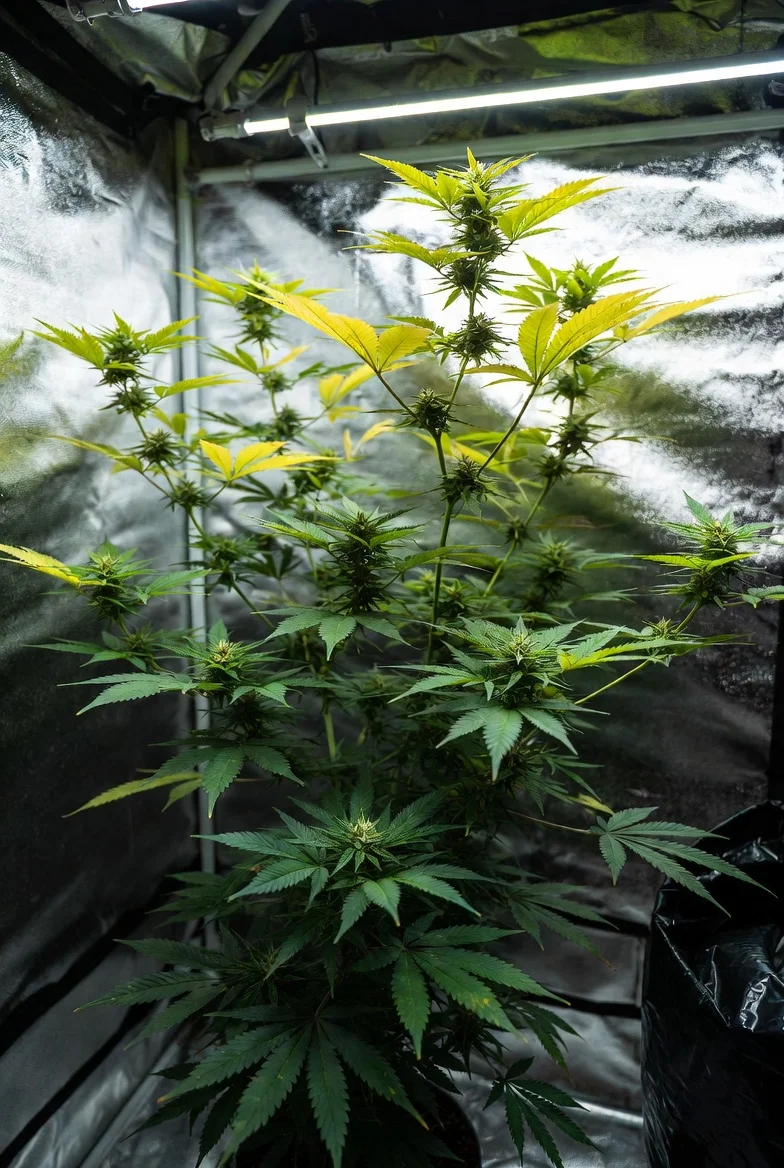
Here’s the problem:
Many new growers see yellowing and immediately assume they need to add nutrients… but in reality, many yellow-leaf issues start in the roots, not the bottle.
This guide will help you diagnose yellowing properly and fix the cause, not just the symptom.
Before doing anything, look closely and ask yourself:
Treating the plant like it’s a nutrient calculator
A plant can look nutrient deficient even when:
So the first thing we do is not guess nutrients.
We diagnose!
If you’re growing in soil, ProMix, or a peat-based mix…
Is the soil staying wet too long?
If the pot feels heavy for days, your roots aren’t getting oxygen.
That can cause:
If it’s heavy, don’t water.
Is your pot too big for the plant?
A tiny plant in a big pot stays wet forever.
Is drainage poor?
If runoff can’t escape, your roots sit in swamp conditions.
PH issues are one of the most common reasons a plant looks “deficient” even when it isn’t.
If you’re in peat-based mixes like ProMix, 5.8 – 6.3 often performs better
Runoff Test (Quick Reality Check)
If you think your PH is fine because you’re watering at 6.5… don’t assume.
Your root zone can drift hard over time.
Next watering, catch a bit of runoff and test it.
If your runoff PH is way off, you’ve probably found the real cause of the issue.
Post your runoff number here and we’ll tell you what it means.
Here’s where most growers get confused.
Nitrogen Deficiency (Very Common)
A plant can be burned and still show yellowing at the same time.
This is one of the best ways to narrow it down.
Yellowing Starts at the Bottom
Usually:
Yellowing Starts at the Top (New Growth)
Usually:
Yellowing Between the Veins
Usually:
Not all yellow leaves are a problem.
If your buds are swelling and the plant is healthy otherwise, don’t panic.
If yellowing comes with:
Spider mites and thrips can mimic nutrient problems.
If you have powdery mildew, rot, or bugs — that becomes priority #1.
Beginner Diagnostic Checklist (Do This Before Changing Anything)
Before you change nutrients or start adding bottles, check:
 Pot feels light or heavy?
How often are you watering?
Is your soil draining properly?
Are you getting runoff?
What’s your PH going in?
What’s your PH coming out (if you measure runoff)?
Temps/humidity stable?
Any pests under leaves?
Is the yellowing old growth or new growth?
If you’re dealing with yellow leaves, post:
No judgment — yellow leaves happen to everyone at some point.
The tricky part is that yellowing can come from several different causes, and the fix depends entirely on what’s actually happening in your plant.
Not sure what’s causing it?
Post a photo and growers here will help you figure it out quickly. You’ll usually get friendly, real advice pretty fast.
Quick ways to narrow it down
Your yellow leaves may be caused by:
- Overwatering → droopy leaves, soil stays wet
- Underwatering → dry soil, thin or crispy leaves
- Nitrogen deficiency → yellowing starts at the bottom
- Light stress → yellowing near the top
- pH issues → multiple symptoms at once
Still not sure? That’s normal.
Yellowing can have multiple causes at the same time.
Post a photo and we’ll help you narrow it down.
Yellow leaves on cannabis plants are one of the most common problems beginner growers face. This guide explains how to diagnose the real cause of yellowing leaves, including nutrient deficiencies, overwatering, pH problems, and natural leaf aging. If your leaves are turning yellow, it’s easy to assume nutrients… but yellow leaves are usually a symptom
Here’s the problem:
Yellow leaves are a symptom, not a diagnosis.
Many new growers see yellowing and immediately assume they need to add nutrients… but in reality, many yellow-leaf issues start in the roots, not the bottle.
This guide will help you diagnose yellowing properly and fix the cause, not just the symptom.
First: What Kind of Yellowing Are You Seeing?
Before doing anything, look closely and ask yourself:
Is the yellowing happening:
- at the bottom of the plant?
- at the top?
- on old leaves or new growth?
- between the veins?
- only on leaf tips?
- with spotting or without spotting?
The #1 Beginner Mistake
Treating the plant like it’s a nutrient calculator
A plant can look nutrient deficient even when:
- the nutrients are present
- the plant can’t absorb them
- the root zone is too wet
- the PH is off
So the first thing we do is not guess nutrients.
We diagnose!
Step 1: Check Your Root Zone First (Most Common Cause)
If you’re growing in soil, ProMix, or a peat-based mix…
Root zone problems are the #1 reason for yellow leaves.
Ask yourself:Is the soil staying wet too long?
If the pot feels heavy for days, your roots aren’t getting oxygen.
That can cause:
- yellowing
- drooping
- stalled growth
- nutrient lockout symptoms
Quick test:
Lift the pot.If it’s heavy, don’t water.
Is your pot too big for the plant?
A tiny plant in a big pot stays wet forever.
Is drainage poor?
If runoff can’t escape, your roots sit in swamp conditions.
Step 2: PH Problems (The Silent Killer)
PH issues are one of the most common reasons a plant looks “deficient” even when it isn’t.
Signs it might be PH-related:
- multiple deficiencies showing at once
- yellowing + weird spotting
- plant stops responding to feeding
If you’re in peat-based mixes like ProMix, 5.8 – 6.3 often performs better
Runoff Test (Quick Reality Check)
If you think your PH is fine because you’re watering at 6.5… don’t assume.
Your root zone can drift hard over time.
Next watering, catch a bit of runoff and test it.
If your runoff PH is way off, you’ve probably found the real cause of the issue.
Post your runoff number here and we’ll tell you what it means.
Step 3: Nutrient Deficiency vs Nutrient Burn
Here’s where most growers get confused.
Nitrogen Deficiency (Very Common)
What it looks like:
- yellowing starts at the bottom
- older leaves fade first
- plant may look pale overall
Common causes:
- not enough feeding
- soil is depleted
- too much watering (roots can’t uptake)
What it looks like:
- burnt tips
- dark green leaves
- clawing
Cause:
Too much nutrients or salt buildup.A plant can be burned and still show yellowing at the same time.
Step 4: Location Matters (Where Yellowing Starts)
This is one of the best ways to narrow it down.
Yellowing Starts at the Bottom
Usually:
- nitrogen deficiency
- natural leaf aging (late flower)
- root zone issues / overwatering
- transplant stress
Yellowing Starts at the Top (New Growth)
Usually:
- PH issue
- calcium/magnesium uptake issue
- iron deficiency
- light stress / bleaching
Yellowing Between the Veins
Usually:
- magnesium deficiency
- PH-related lockout
Step 5: Is It Normal Yellowing?
Not all yellow leaves are a problem.
In late flower:
Yellowing is common and normal, especially lower leaves.If your buds are swelling and the plant is healthy otherwise, don’t panic.
Step 6: Rule Out Bugs and Mold
If yellowing comes with:
- speckling
- stippling
- tiny dots
- webbing
- leaf damage
Spider mites and thrips can mimic nutrient problems.
If you have powdery mildew, rot, or bugs — that becomes priority #1.
Beginner Diagnostic Checklist (Do This Before Changing Anything)
Before you change nutrients or start adding bottles, check:
Pot feels light or heavy? How often are you watering? Is your soil draining properly? Are you getting runoff? What’s your PH going in? What’s your PH coming out (if you measure runoff)? Temps/humidity stable? Any pests under leaves? Is the yellowing old growth or new growth?Post Pics Here (We’ll Help You Diagnose It)
If you’re dealing with yellow leaves, post:
- a full plant photo
- a close-up of the yellowing
- your medium
- pot size
- watering frequency
- nutrients used
- PH (if known)
- temps/humidity
No judgment — yellow leaves happen to everyone at some point.