🌱 How to Make Small-Batch STS Spray (Silver Thiosulfate) for Hobby Cannabis Breeders

Laughing Grass

Well-Known Menace
Staff Member
Host

Quick Summary: Small Batch STS Recipe​

  • Purpose: Reversing female cannabis plants to create feminized seeds.
  • Yield: Makes 300ml of working solution (perfect for 1-2 small plants).
  • Core Ingredients:
  • 0.03g Silver Nitrate ($AgNO_3$) and
  • 0.12g Sodium Thiosulfate ($Na_2S_2O_3$).
  • Key Ratio: 1 part Silver Nitrate solution mixed into 4 parts Sodium Thiosulfate solution.
  • Safe Handling: Always use distilled water and wear gloves; Silver Nitrate can stain skin and surfaces.

Silver Thiosulfate (STS) is one of the most powerful tools a cannabis grower can add to their kit. It’s the key to producing feminized seeds or preserving unique genetics by reversing female plants and collecting pollen.

But here’s the problem: almost every STS guide on the internet gives you a recipe designed for commercial scale. You’ll see instructions for mixing a liter of ā€œSolution Aā€ and a liter of ā€œSolution Bā€ — enough to make 10 gallons of spray. For a home grower, that’s way too much.

Since STS only lasts about a month in the fridge, most of that expensive solution ends up down the drain.

That’s why we created this guide: a small-batch STS recipe (300ml) that’s perfect for the hobby grower. Just enough to reverse a couple of plants, with no waste, no mess, and no draining your wallet.

What is STS Spray (and Why Use It)?

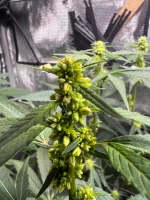
STS (Silver Thiosulfate) works by inhibiting ethylene, a natural plant hormone. In cannabis, ethylene regulates female flower development. When you suppress it with STS, the female plant begins to produce male pollen sacs.

Why does that matter? Because pollen from a reversed female can only carry X chromosomes. When used to pollinate another female, the resulting seeds are nearly 100% feminized.

For hobby growers, this means:
  • You can preserve genetics without keeping endless mother plants.
  • You can make your own feminized seeds at home.
  • You stay in control of your breeding projects instead of depending on seed drops.
IMG_8985.webp

āš ļø Safety First – Handling STS Responsibly

STS is safe to use when handled correctly, but you should always treat it with respect.
  • 🧤 Wear gloves (it can irritate skin).
  • 🚫 Don’t use metal containers (sodium thiosulfate reacts with metals). Stick to glass or plastic.
  • šŸŒ«ļø Spray away from other plants (STS pollen spray will contaminate anything nearby).
  • šŸƒ Do not consume treated plants — they are for pollen only.
Think of this as a breeding tool, not a consumable product.


šŸ› ļø Tools and Ingredients for a 300ml Batch

Here’s everything you’ll need:

Tools​

  • Gloves
  • Scale accurate to 0.01g
  • 2 shot glasses or small plastic cups (≄30ml each)
  • Measuring cup (250ml capacity)
  • Amber glass bottle with sprayer (≄500ml)
  • Plastic spoon
  • Small funnel
Ingredients
  • 300ml distilled water
  • 0.03g Silver Nitrate (AgNOā‚ƒ)
  • 0.12g Sodium Thiosulfate Anhydrous (Naā‚‚Sā‚‚Oā‚ƒ)
(Pro tip: both chemicals are affordable and widely available from lab supply shops or online.)


🧪 Step-by-Step: How to Make Small-Batch STS Spray

Step 1: Prepare the Silver Nitrate Solution​

  • Measure 0.03g Silver Nitrate on the scale.
  • Add 30ml distilled water in a shot glass.
  • Stir with a plastic spoon until dissolved.

Step 2: Prepare the Sodium Thiosulfate Solution
  • Measure 0.18g Sodium Thiosulfate.
  • Add 30ml distilled water in a second shot glass.
  • Stir until fully dissolved.

Step 3: Combine the Solutions​

  • Pour the Sodium Thiosulfate solution into your amber bottle using the funnel.
  • Slowly add the Silver Nitrate solution.
  • Seal and shake gently for ~10 seconds.

Step 4: Dilute the Mixture​

  • Add 240ml distilled water to the bottle.
  • Seal and shake vigorously for ~20 seconds.

That’s it — you now have 300ml of ready-to-use STS spray.


🌸 How to Apply STS Spray (and When)

Timing is everything with STS. Start too late and you’ll get poor or no seed set.

Recommended Spray Schedule:
  • 10 days before flip to 12/12
  • 5 days before flip
  • Day of flip

šŸ“Œ Important: Always spray right before lights off to allow a minimum of 6 hours of darkness. STS is light-sensitive.

Application Tips​

  • Isolate your target plants — keep them away from anything you plan to consume.
  • Spray stems, nodes, and branches — leaves don’t need it.
  • Don’t soak the medium — aim for plant tissue only.
  • Treated plants cannot be smoked or consumed.
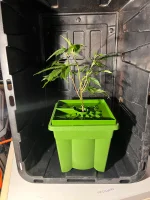
After spraying, let plants sit in darkness with fans off for at least 6 hours. Resume normal airflow after.

IMG_8748.webp


šŸ—‚ļø Storage and Shelf Life
  • Store in the refrigerator in your amber bottle.
  • Effective shelf life: ~1 month.
  • Make only what you need. This small-batch recipe keeps waste to a minimum.


šŸ’” Pro Tips & Common Mistakes to Avoid
  • Starting too late: Begin spraying before the flip, not on the same day.
  • Over-spraying leaves: Wastes solution and doesn’t improve results.
  • Forgetting gloves: STS can irritate skin.
  • Not isolating plants: STS-treated plants will release pollen — avoid accidental pollination.


āœ… Why Small-Batch STS is a Game-Changer

Most guides leave hobbyists mixing gallons they’ll never use. This recipe is different — just enough for 2–4 plants, stored easily in your fridge, with no expensive waste.

Whether you’re preserving a clone-only keeper or making feminized seeds from your favorite strain, this method keeps it simple, affordable, and effective.


🌱 Have questions or results to share?
Join our friendly grow crew to swap pics, compare notes, and get help.
Join the conversation →
 
Last edited:
Thank you for the tutorial. Where are you sourcing the Silver Nitrate and Thiosulfate ?

I bought the breeders kit from STS Canada.


Seriously considering a group buy or something. $90 for a couple grams of materials is nuts. That's what led me on to figure out how to make smaller batches lol.
 
Silver Thiosulfate (STS) is an essential tool for cannabis cultivators seeking to produce feminized seeds or preserve unique genetics. This spray induces pollen sac development on female plants, enabling controlled breeding and seed production.

Most STS recipes are designed for large-scale applications, but this guide provides a simple method to prepare 300ml of STS spray—sufficient to reverse up to four plants.

View attachment 1047


Precautions

Safety is critical when handling STS. Follow these guidelines:
  • Wear gloves to protect your skin while mixing and applying the spray. STS can cause minor irritation.
  • Avoid using metal containers, as Sodium Thiosulfate reacts with metals. Stick to glass or plastic.


Tools and Ingredients Needed

Tools

  • Gloves: Essential for safety.
  • Scale: Accurate to 0.01 grams.
  • Shot Glasses: Two glass or plastic cups, each with a capacity of at least 30ml.
  • Measuring Cup: A 250ml glass or plastic container.
  • Amber Glass Bottle: A 500ml bottle with a sprayer and a tight-fitting lid.
  • Plastic Spoon: For stirring solutions.
  • Small Funnel: To ensure precise pouring.
Ingredients
  • Distilled Water: 300ml.
  • Silver Nitrate (AgNOā‚ƒ): 0.03 grams.
  • Sodium Thiosulfate Anhydrous (Naā‚‚Sā‚‚Oā‚ƒ): 0.18 grams.


Step-by-Step Instructions

1. Prepare the Silver Nitrate Solution

  1. Measure 0.03 grams of Silver Nitrate using the scale.
  2. Add 30ml of distilled water to a shot glass.
  3. Stir with a plastic spoon until the Silver Nitrate is fully dissolved.
2. Prepare the Sodium Thiosulfate Solution
  1. Measure 0.18 grams of Sodium Thiosulfate.
  2. Add 30ml of distilled water to a second shot glass.
  3. Stir until the Sodium Thiosulfate is completely dissolved.
3. Combine the Solutions
  1. Using the funnel, pour the Sodium Thiosulfate solution into the amber glass bottle.
  2. Slowly add the Silver Nitrate solution to the bottle.
  3. Seal the bottle and shake gently for about 10 seconds.
4. Dilute the Mixture
  1. Add 240ml of distilled water to the amber glass bottle.
  2. Seal the bottle and shake vigorously for 20 seconds to ensure thorough mixing.


Application and Storage
  • Your STS spray is now ready to use.
  • Store the solution in a refrigerator to preserve its effectiveness for up to one month.
  • Handle with care and always wear gloves during application.


By following this small-batch recipe, you can create a precise, cost-effective amount of STS spray that is perfectly suited for personal cannabis breeding projects. This method empowers cultivators to take control of their genetics with minimal waste and maximum efficiency.

Mastering the Use of STS Spray for Plant Reversal

Applying STS spray is a straightforward process, but timing is crucial to achieving successful results. Mistiming the application—such as starting it when flipping to a 12/12 light cycle—can lead to late reversals, resulting in immature seeds or no seeds at all. To optimize outcomes, it’s recommended to begin the STS spray regimen 10 days before transitioning your plants to the flowering light cycle.

View attachment 1063

Recommended STS Spray Schedule:​

  • 10 Days Before the Flip
  • 5 Days Before the Flip
  • Day of the Flip
Because STS is light-sensitive, application should occur right before the lights turn off to allow for a minimum of six hours of darkness.


How to Apply STS Spray​

  1. Isolate the Target Plants
    Start by separating the plants you wish to reverse from the rest of your grow environment, including clones and seedlings. It’s best to spray in a separate area, such as a tote or another room, to avoid contaminating plants intended for consumption. Be cautious, as STS spray can stain surfaces.
  2. Focus the Spray
    Direct the spray onto the stems, nodes, and branches of the target plants. Ensure these areas are thoroughly coated without allowing excess STS to soak into the growing medium. Spraying the leaves is unnecessary and can waste your solution.
  3. After Spraying
    Place the treated plants back into their grow tent for the dark cycle. Turn off fans and ensure the treated plants do not come into contact with any consumable plants. It’s critical to note that plants treated with STS cannot be consumed. Even if partial reversal occurs, resulting in both male and female flowers, the plant must be discarded after pollination. Fans can be turned back on six hours after application.
By carefully following this schedule and procedure, you can increase your chances of a successful reversal while minimizing risks to your grow environment.
Awesome thread,great details, keep em coming!
 
This seems to be the best deal for Sodium Thiosulfate in Canada.

I've searched in the past and this is the first I've seen it on amazon Canada. Still kinda pricy for me I think. I may have to stick to colloidal silver for now. However, I think the grass may be greener on the STS side of things. Do you find it to be hit or miss at all with STS depending on the plant ? I would say my CS attempts have only been about 60% successful with varying amounts of viable pollen.
 
I've searched in the past and this is the first I've seen it on amazon Canada. Still kinda pricy for me I think. I may have to stick to colloidal silver for now. However, I think the grass may be greener on the STS side of things. Do you find it to be hit or miss at all with STS depending on the plant ? I would say my CS attempts have only been about 60% successful with varying amounts of viable pollen.

I've only done three plants with this recipe. Two were complete reversals and one was a partial that still had lots of female flowers. The partial didn't seem to have much pollen at all.
 
I’ve made cs with distilled water, a 9v battery, mason jar , silver wire, a small board and a couple of 9ā€ 18 ga. wires . Instructions can be found on yt. A friend of mine turned me on to it and I tried it on a single limb and was able to make pollen. I only did it once, it was a basic electrolysis process to shed the particles of silver but no secondary metal for those particles to attach to.
 
Over on RIU under advanced mj cultivaters/ breeders paradise, there’s lots of conversations about this and some comparisons on cs to sts. It’s probably been six or seven years since I did it and don’t really remember a lot about it so don’t take me as any kind of expert because I’m definitely not.
 
Back
Top